
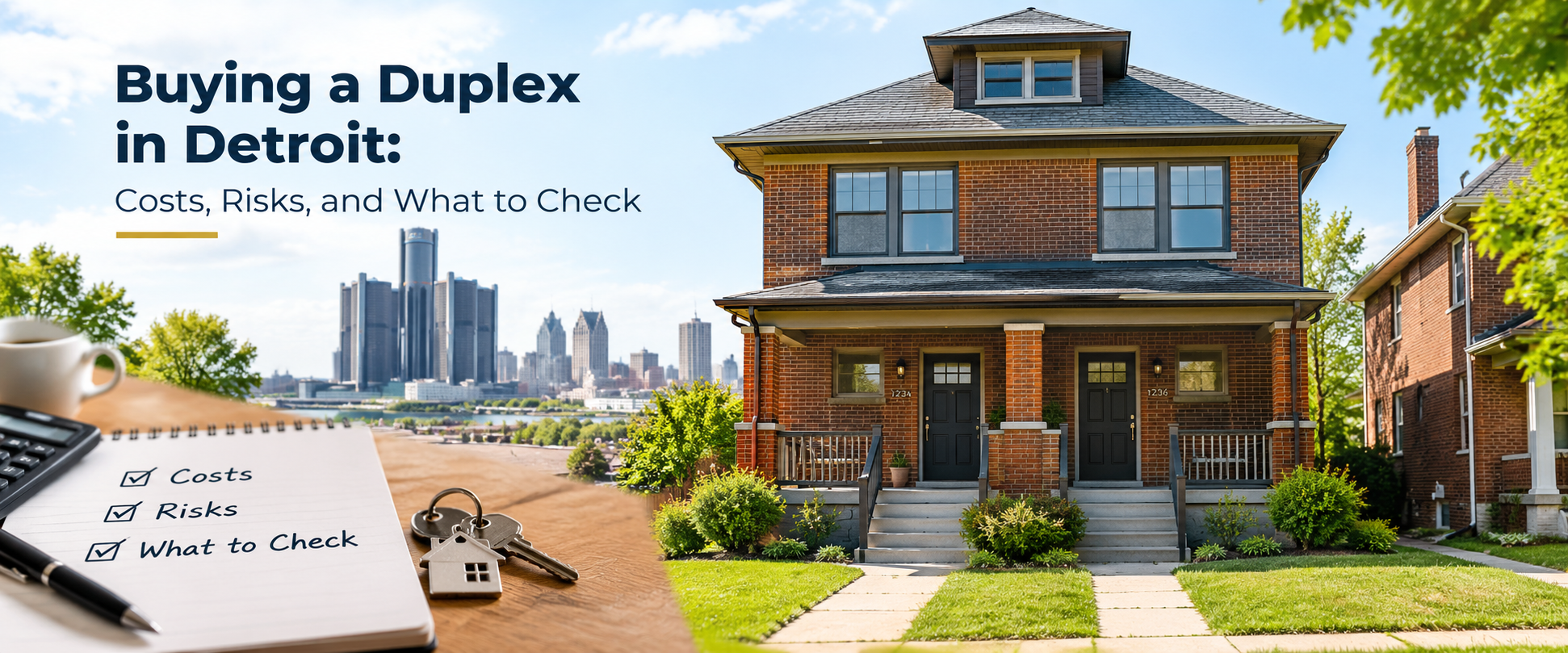
Imagine finding a Detroit property with two separate living units. One could become a comfortable home, while the other could provide rental income to help offset monthly housing costs. It sounds appealing, especially for first-time buyers who want to build equity while keeping expenses manageable.
However, buying a duplex in Detroit requires more than finding a property with two front doors. Buyers must consider financing, repairs, property taxes, insurance, rental rules, and the possibility of an empty unit.
The right property can support long-term housing and investment goals. The wrong one can create unexpected expenses that outweigh its potential benefits.
Key Takeaways
- Buying a duplex can provide a home and a potential source of rental income.
- Purchase costs include more than the down payment and mortgage.
- Inspections, permits, zoning, and rental compliance deserve careful attention.
- Rental income and property appreciation are never guaranteed, so buyers should evaluate the numbers before making an offer.
What Does Buying a Duplex in Detroit Mean?
A duplex is a residential property containing two separate living units within one building or on one property. Each unit typically has its own living space, kitchen, and bathroom.
Some buyers choose an owner-occupied duplex, meaning they live in one unit and rent the other. Others purchase both units as an investment property.
For example, a buyer might choose a duplex in a Detroit neighborhood that fits their budget and daily needs. They could occupy one unit and rent the second to a tenant. The rent might help cover part of the mortgage and other expenses, depending on the property’s performance.
The important distinction is that rental income can reduce housing costs, but it does not automatically make a property profitable.
Before searching for a duplex for sale in Detroit, MI, buyers should understand their budget, intended use, and willingness to manage a second unit.
Understanding the Costs of Buying a Duplex
The purchase price is only one part of the financial picture. Buyers should estimate both upfront expenses and the costs of maintaining the property over time.
1. Down Payment and Closing Costs
The down payment depends on the loan program, property type, lender requirements, and buyer eligibility. Financing options may differ between owner-occupied properties and duplexes purchased entirely as investments.
Closing costs can include lender fees, appraisal charges, title services, prepaid taxes, and insurance expenses. Buyers should request a detailed estimate from their lender before making financial commitments.
A lower down payment may preserve cash for immediate needs, but it can also affect monthly payments and loan terms.
2. Mortgage Payments and Financing
Duplex financing options depend on how the buyer plans to use the property and which loan programs they qualify for.
Owner-occupied buyers may have different financing options from investors who intend to rent both units. Some loan programs also have property-condition and occupancy requirements.
Before making an offer, buyers should compare interest rates, monthly payments, down payment requirements, and any applicable mortgage insurance.
They should also ask whether projected rental income can be considered during the lender’s qualification process. Lenders have different rules for evaluating that income.
3. Property Taxes and Insurance
Property taxes and insurance can significantly affect the cost of owning a duplex.
Buyers should review the property’s current tax information and ask how a purchase could affect future tax assessments. They should also obtain an insurance quote based on the building’s condition, intended occupancy, and rental use.
A standard homeowner policy may not cover every situation involving tenants. Buyers should confirm that their coverage fits the property’s actual use.
4. Repairs and Renovations
A duplex may look attractive during a showing but still need costly repairs. Older properties can require attention to roofs, plumbing, electrical systems, heating equipment, windows, and foundations.
Even cosmetic work can add up when both units need improvements.
Before closing, buyers should obtain a professional inspection and develop a realistic repair budget. If major work is needed, contractor estimates can help clarify whether the purchase still makes financial sense.
5. Ongoing Operating Expenses
Ownership costs continue after the purchase. Buyers should plan for maintenance, utilities they are responsible for, common-area upkeep, possible vacancy periods, and unexpected repairs.
They should also consider the cost of managing tenants, whether they handle responsibilities themselves or hire a property manager.
A property that appears affordable based on its mortgage alone may be much more expensive once all operating costs are included.
How to Estimate Rental Income and Potential Cash Flow
Rental income is one of the main reasons buyers consider a Detroit duplex investment property. However, expected rent should never be treated as guaranteed income.
Buyers should research comparable rental properties in the same neighborhood, paying attention to unit size, condition, amenities, and location. Asking rents provide a starting point, but they do not prove what a tenant will actually pay.
A simple way to evaluate a property is to estimate its monthly income and subtract its expected expenses.
| Financial item | What buyers should evaluate |
| Rental income | Realistic rent for the second unit |
| Mortgage | Principal, interest, and applicable mortgage insurance |
| Property taxes | Current taxes and possible future changes |
| Insurance | Coverage appropriate for the building and occupancy |
| Maintenance | Routine upkeep and expected repairs |
| Vacancy | Periods when the unit may not generate rent |
| Utilities | Services paid by the owner |
| Management | Time or fees associated with tenant management |
Example: A Duplex With One Rental Unit
Suppose a buyer plans to live in one unit and rent the other. The expected rent could help cover part of the monthly mortgage payment.
However, the rental unit might need repairs before a tenant moves in. Later, a tenant could leave, creating a period without rental income. The owner would still need to pay the mortgage, taxes, insurance, and other bills.
This is why buyers should calculate whether they can afford the property without relying on uninterrupted rental income.
A practical budget should include a reserve for unexpected repairs and vacancies. The amount will depend on the property’s condition, the buyer’s finances, and the risks involved.
Financing Options for an Owner-Occupied Duplex in Detroit
An owner-occupied duplex can appeal to buyers who want to combine homeownership with potential rental income.
Some mortgage programs allow eligible buyers to finance properties with multiple residential units. However, the required down payment, credit standards, occupancy rules, and property conditions vary by program and lender.
Buyers should compare available options rather than assuming a duplex qualifies for the same terms as a single-family home.
Before applying, they should clarify three things:
- Occupancy requirements: How long must the buyer live in the property, and which unit must they occupy?
- Property eligibility: Does the building meet the lender’s condition and appraisal requirements?
- Rental income treatment: Will the lender consider expected rent when evaluating the buyer’s ability to repay the loan?
A mortgage professional can explain the options that fit the buyer’s circumstances. Buyers should receive financing estimates before committing to a purchase.
What to Check Before Buying a Duplex in Detroit
A careful inspection can help buyers identify problems that are easy to overlook during a showing. Both units deserve attention, even if one appears ready for occupancy.
1. Inspect the Building’s Structure
Look for signs of water intrusion, foundation movement, roof damage, deteriorating masonry, and poorly repaired areas.
These issues do not always mean a property should be rejected. However, buyers need to understand their seriousness and likely repair costs before proceeding.
A qualified home inspector can identify concerns that may require further evaluation by a specialist.
2. Check Plumbing, Electrical, and Heating Systems
Confirm that essential systems operate properly in both units. Ask about the age and condition of the heating equipment, water heaters, electrical panels, and plumbing.
Buyers should also check whether each unit has separate utility meters or shares services. Shared utilities can affect expense allocation and future tenant arrangements.
Older wiring, leaking pipes, or failing heating equipment may create significant costs if left unresolved.
3. Verify That Both Units Are Legal
A building that looks like a duplex is not necessarily approved for two separate dwelling units.
Buyers should verify the property’s permitted use, zoning, relevant permits, and occupancy status with the appropriate Detroit authorities. They should also investigate whether previous renovations received the required approvals.
Unapproved conversions can create legal, safety, financing, and insurance complications.
4. Review Rental Requirements
Before planning to rent the second unit, buyers should confirm the applicable rental registration, inspection, certification, and other compliance requirements.
They should also determine whether any outstanding violations need attention.
Rental rules and requirements can depend on the property’s circumstances and current local regulations. Buyers should verify the requirements directly with the relevant city department rather than relying solely on a listing description or seller’s assurances.
5. Evaluate Each Unit Separately
Walk through both units carefully. Check the condition of kitchens, bathrooms, flooring, windows, doors, and appliances included in the sale.
Consider privacy, entrances, shared spaces, storage, and parking. A layout that works well for the owner may not offer the same convenience for a tenant.
Buyers should also ask whether either unit is currently occupied. Existing leases, security deposits, and tenant arrangements may affect the transaction and future plans.
6. Research the Neighborhood
Neighborhood selection matters for both everyday living and potential rental performance.
Buyers should consider access to transportation, employment centers, grocery stores, services, and other amenities that matter to them and potential tenants.
They should also compare similar properties, investigate local rental demand, and assess the condition of nearby homes.
No neighborhood guarantees appreciation or reliable rental income. The goal is to understand the specific property and its surroundings before deciding whether the purchase fits the buyer’s plans.
A Practical Duplex-Buying Framework
Buying a duplex in Detroit becomes more manageable when the process follows a clear sequence.
Step 1: Establish the budget
Calculate the amount available for the down payment, closing costs, immediate repairs, and emergency reserves. Include ongoing expenses, not just the mortgage.
Step 2: Compare properties and neighborhoods
Search for duplexes that match the buyer’s budget, preferred location, condition requirements, and intended occupancy. Compare similar homes rather than relying on listing prices alone.
Step 3: Verify condition and compliance
Arrange inspections, review permits, investigate zoning and rental requirements, and obtain estimates for necessary repairs.
Step 4: Evaluate the numbers
Estimate realistic rental income and subtract operating expenses. Check whether the property remains affordable during vacancies or unexpected repairs.
Step 5: Review the purchase before closing
Work with the lender and relevant professionals to review financing, inspection findings, insurance, title matters, and contractual obligations before finalizing the transaction.
Common Mistakes to Avoid When Buying a Duplex
Even buyers who research the market carefully can overlook important details. Avoiding these mistakes can help prevent costly surprises.
Focusing only on the purchase price. A low asking price does not guarantee an affordable property. Repairs, insurance, taxes, and ongoing maintenance can change the overall cost.
Overestimating rental income. Buyers should use realistic rental comparisons and account for periods without tenants. A financial plan that works only when the unit is continuously occupied may be too risky.
Skipping inspections. A visual walkthrough cannot replace a professional inspection. Buyers should investigate significant concerns before their contractual inspection or due diligence opportunities expire.
Assuming both units are legally approved. A separate entrance or kitchen does not prove that a second unit is authorized. Buyers should verify the property’s legal status.
Using every available dollar at closing. New owners may need immediate repairs after moving in. Keeping an appropriate cash reserve can help them manage unexpected expenses.
How to Decide Whether a Detroit Duplex Fits the Budget
Before making an offer, buyers should consider how the property will fit their lives and finances.
For an owner-occupant, the central question is whether the property remains affordable after accounting for realistic rental income and all expenses. The buyer should also consider whether they are comfortable sharing a building with tenants and handling landlord responsibilities.
For an investor planning to rent both units, the analysis is different. Both units must support the investment plan, and the buyer needs a strategy for tenant management, maintenance, and vacancies.
A duplex may be less attractive if it needs extensive repairs, has unresolved compliance issues, or depends on unrealistic rental assumptions. A property with manageable expenses, suitable living arrangements, and a clear maintenance plan may be worth further consideration.
Neither approach guarantees a successful investment. The decision should reflect the property’s condition, financing terms, and the buyer’s financial capacity.
How a Detroit Real Estate Professional Can Help
Finding the right duplex involves more than locating a property with two units. Buyers may need help comparing neighborhoods, understanding property features, arranging showings, evaluating asking prices, and navigating negotiations.
A real estate professional familiar with Detroit can help buyers identify properties that align with their goals and highlight questions that deserve further investigation.
However, real estate guidance does not replace specialized inspections, legal advice, tax advice, or mortgage underwriting. Buyers should work with qualified professionals when technical or financial questions arise.
Realty In The D provides residential property buying services in Detroit, MI, including property searches, neighborhood guidance, and assistance throughout the buying process. Buyers exploring duplexes can seek personalized guidance while evaluating their options.
Final Thoughts
Buying a Duplex in Detroit can offer an opportunity to combine housing with potential rental income, but the property must make sense financially and practically.
Buyers should look beyond the asking price, investigate both units, verify legal requirements, and prepare for repairs and vacancies. They should also assess their financing options and maintain enough financial flexibility to handle unexpected costs.
A careful approach helps buyers distinguish an appealing listing from a property that genuinely fits their goals. With thorough research and appropriate professional guidance, they can make a more informed decision about duplex ownership in Detroit.
Ready to explore duplex properties in Detroit? Call (248) 672-8837 or email lvirkus@me.com to discuss property-buying goals and available options.
FAQ
1. Is buying a duplex in Detroit a good investment?
It can be suitable for buyers seeking rental income or a combination of homeownership and investment. However, the outcome depends on the purchase price, financing, property condition, rental demand, and ongoing expenses. Buyers should evaluate each property individually.
2. What costs should buyers consider when purchasing a duplex?
Buyers should budget for the down payment, closing costs, mortgage payments, property taxes, insurance, inspections, repairs, maintenance, utilities, and potential vacancies. Renovations or compliance-related work may add to the initial expense.
3. Can a first-time buyer live in one unit and rent the other?
Yes, this arrangement may be possible if the buyer qualifies for suitable financing and the property meets applicable occupancy and legal requirements. Buyers should confirm loan terms and local rental rules before purchasing.
4. What should buyers check during a duplex inspection?
They should examine the foundation, roof, plumbing, electrical systems, heating equipment, kitchens, bathrooms, and other major components in both units. They should also verify permits, legal unit status, and any necessary rental approvals.
5. How can buyers find a suitable duplex in Detroit?
Buyers can compare available listings, research neighborhoods, establish a realistic budget, and evaluate each property’s condition and potential expenses. A Detroit real estate professional can help them navigate the search, showings, and negotiation process.